A running toilet usually means water is leaking from the tank into the bowl because one or more internal parts are worn, misaligned, or set incorrectly. The most common causes include a faulty flapper, a fill valve problem, a float set too high, a loose or damaged chain, and an overflow issue. This guide explains how to identify each fault, what to adjust or replace, and when a full valve or seal replacement is the better fix.
Key takeaways
- Shut off the isolation valve and inspect the flapper for warping, hardening or mineral build-up.
- A misaligned flapper leaves a small gap, letting tank water leak continuously into the bowl.
- Set the float so water stops about 2.5cm below the top of the overflow tube.
- Check the chain after flushing; it should drop freely and keep slight slack.
- Clean the fill valve first if it keeps running after the tank reaches normal level.
- Inspect the overflow tube and flush valve for cracks, looseness or a poor seal.
Replace a Worn or Misaligned Flapper That No Longer Seals
Shut off the water at the isolation valve, flush the toilet, and inspect the flapper first. A worn or misaligned flapper often causes a running toilet because a small gap lets water leak from the tank into the bowl.
The flapper covers the flush valve opening at the bottom of the tank. If the rubber has hardened, warped, or picked up mineral build-up, it cannot seal flat on the valve seat. The fill valve then keeps adding water to replace the loss.
Check the chain next. If it is too short, it can hold the flapper open after a flush. If it is too long, it may catch under the flapper. Leave a little slack when the flapper is closed.
Clean the valve seat with a soft cloth if you see residue. If the flapper is cracked, stiff, or misshapen, replace it instead of adjusting it further. Match the new part to the flush valve size and toilet brand where possible. Manufacturers such as Korky and Fluidmaster list compatibility details for common models.
Turn the water back on and wait a few minutes after the tank fills. If the water stays still and the fill valve does not switch on again, the seal is holding properly.
Adjust the Float When the Water Level Rises Too High
Source: article content; measurement shown in cm.
Lowering the shut-off point slightly can stop a toilet refilling every few minutes and cut wasted water straight away. Adjust the float, since it controls when the fill valve closes. If it sits too high, water spills into the overflow tube and the valve keeps cycling.
Remove the tank lid and check the water line. Most tanks should fill to about 2.5cm below the top of the overflow tube. On a float-cup valve, turn the adjustment screw or slide clip to lower the float. On an older ball float, turn the screw on the valve arm or bend the brass arm gently if needed.
This quick fix costs nothing and often stops constant running without new parts. It also shows whether the fill valve still responds properly. If the float moves freely but the water level keeps rising, the valve may be worn or clogged and need cleaning or replacement. If the level is already correct, check the overflow tube and refill tube next.
Reset or Shorten the Chain if It Keeps the Flush Valve Slightly Open
Do not replace parts at random before checking the chain. A chain that is too short can hold the flush valve slightly open after the handle returns. Even a small lift lets water pass the seal and makes the fill valve keep topping up the tank.
Remove the lid and press the handle once, then watch the chain as the flapper drops. It should lift freely and fall back with slight slack. If the chain stays taut, move the hook down one or two links on the flush lever. If it is too long, shorten it so it does not snag under the flapper or catch on the valve body.
Flush again and check that the flapper settles flat on the valve seat without the chain pulling up. The right chain length lets the valve open fully, close cleanly, and stay shut. If the handle still sticks, inspect the lever arm for corrosion or misalignment before replacing internal parts.
Clean or Replace the Fill Valve When It Fails to Shut Off Properly
If a fill valve does not shut off, it keeps feeding water into the tank even when the flapper, float and chain work properly.
Shut off the isolation valve, remove the tank lid and flush to lower the water level. Turn the water back on slightly and watch the valve refill the tank. If water keeps running after the tank reaches its normal level, debris or a worn seal is often the cause.
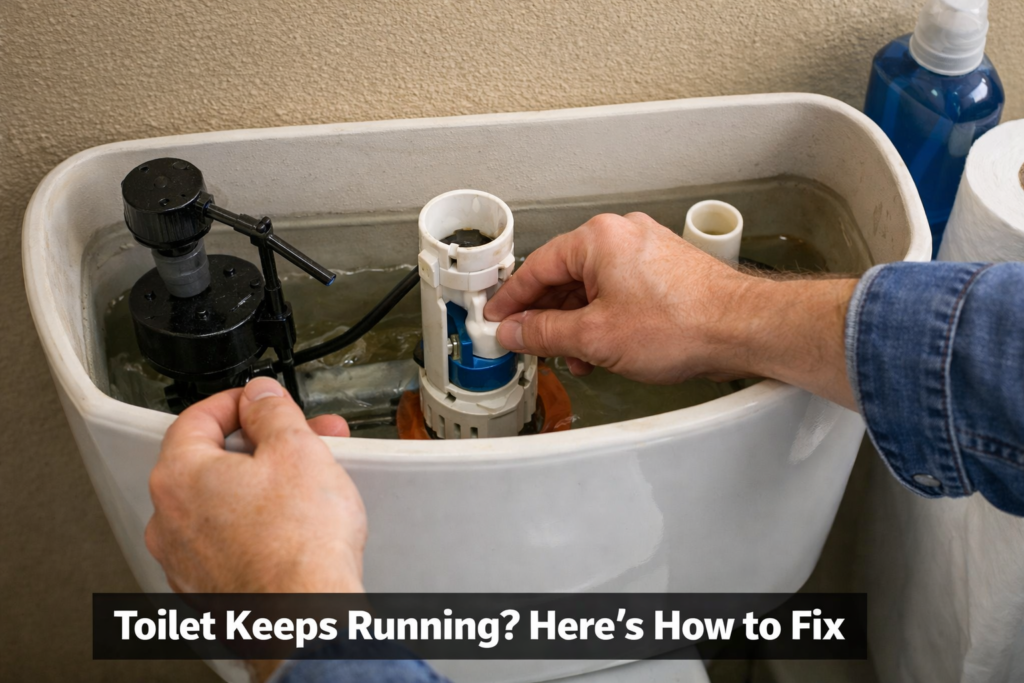
Clean the valve first. On many modern units, including common Fluidmaster models, the cap twists off after you lift the arm or clip. Hold a cup over the open valve, open the water briefly to flush out grit, then reassemble and test again. If the valve still hisses, trickles or fails to stop, replace it with a matching height-adjustable fill valve.
Do not force the cap or overtighten the locknut under the tank. Keep the refill tube above the overflow pipe rather than pushed into it, or the toilet may keep running after the new valve is fitted.
Check the Overflow Tube and Flush Valve for Cracks or Poor Fit
Tank water stops escaping when the overflow tube and flush valve sit straight, seal tightly and show no cracks. If either part is split, loose or poorly seated, water can leak into the bowl even after other tank parts have been checked.
Lift the tank lid and examine the overflow tube where it joins the flush valve at the tank base. Hairline cracks often form near that joint or along the tube. Press the flush valve gently from side to side. Movement can mean the retaining nut has loosened or the gasket has worn, breaking the seal.
Pour a small amount of water around the flush valve seat and watch for a steady drop into the bowl. If the tube is cracked, replace it. Sealants rarely last inside a wet tank. If the valve sits crooked or rocks, remove the tank and refit the flush valve with a new gasket, tightening it evenly so the parts sit flat.
Frequently Asked Questions
Why does a toilet keep running after flushing?
A toilet keeps running when water continues to leak from the tank into the bowl after a flush. The usual causes are a worn flapper, a misaligned float, a faulty fill valve, or a chain that is too tight or tangled. Even a small leak can keep the refill cycle going.
How can you tell if the flapper is causing a running toilet?
If water keeps slipping from the tank into the bowl after flushing, the flapper is a likely cause. Listen for a faint hiss, watch for ripples in the bowl, or add a few drops of food colouring to the tank. If colour appears in the bowl without flushing, the flapper is leaking.
Can a faulty fill valve make a toilet run continuously?
Inspect the fill valve first and replace it if it does not shut off properly. A worn or dirty fill valve can keep water flowing into the tank, which makes the toilet run continuously. If the valve works, check the float height and refill tube position next.
What should you check if the toilet water level is too high?
If water sits close to the top of the overflow tube, check the fill valve and float first. The float may be set too high or stuck, which keeps the tank overfilling. Adjust the float down, and make sure the fill valve shuts off fully once the tank reaches the correct level.
When should you repair a running toilet instead of replacing parts?
Most running toilet repairs take under 30 minutes and need only a simple adjustment. Repair it when the flapper, float, chain or fill valve still works but sits too high, too low or out of place. Replace parts only if they are cracked, warped, corroded or still leak after adjustment.