An overflow pipe dripping outside usually means a cistern, boiler, or hot water system is releasing excess water because a valve, float, or internal component is not working properly. Some causes are minor and easy to fix, while others point to pressure faults or parts that need prompt attention. This article explains the most common reasons, how to identify the source, and when a steady drip needs urgent repair.
Key takeaways
- An outside overflow pipe should stay dry, so dripping signals excess water discharge.
- Check whether dripping is constant or starts after water use to narrow the fault.
- A worn fill valve or misadjusted float often keeps toilet cisterns and tanks overflowing.
- Brief drips after heating cycles can indicate thermal expansion or a lifting pressure relief valve.
- A steady overnight drip usually points to a valve failing to reseat properly.
- Before calling, trace the pipe source and inspect for stuck floats or continued water entry.
- Repair serviceable parts promptly, but replace worn seals or corroded components causing repeat faults.
Why an Overflow Pipe Drips Outside and What It Usually Points To
Check whether the drip is steady or only starts after water use. That pattern helps narrow down the fault. An outside overflow pipe should stay dry, so dripping usually means a cistern, tank or safety valve is releasing excess water.
A common cause is a toilet cistern that does not shut off fully. Water keeps entering, rises past the set level, and escapes through the overflow instead of stopping at the fill valve. A faulty float valve, worn washer or failed inlet valve often causes this.
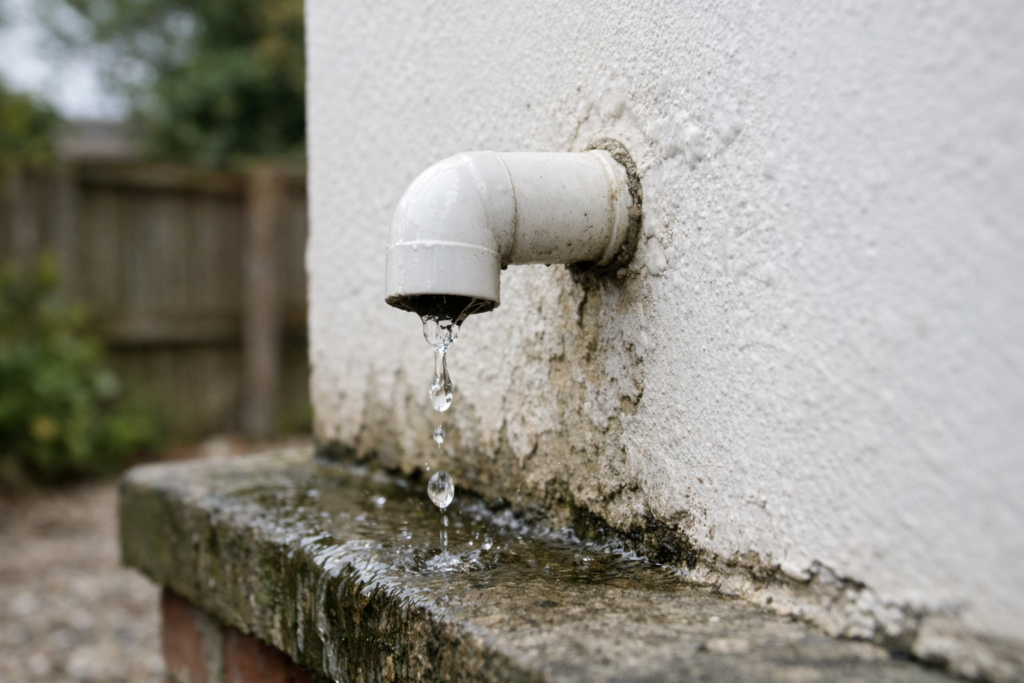
A dripping pipe can also point to a cold water tank in the loft or pressure relief discharge from a hot water system. If the flow is warm, the fault may involve the boiler or unvented cylinder. That needs faster attention if the discharge is regular.
Even a slow drip wastes water and may explain a Water bill high problem. If the pipe runs constantly, the water is hot, or staining appears below, arrange a plumbing inspection before the fault worsens.
Common Faults Behind a Dripping Overflow Pipe
| Where the overflow comes from | What it often points to |
|---|---|
| Toilet cistern | Fill valve not shutting off fully, faulty float valve, worn washer or failed inlet valve. |
| Cold water tank in the loft | Float mechanism sticking, poor adjustment, damaged washer or older ballcock fault. |
| Boiler overflow or discharge pipe | Pressure-related fault such as a failing pressure relief valve, expansion vessel issue or rising system pressure. |
| Hot water system or unvented cylinder | Regular warm discharge that needs faster attention, especially if linked to pressure or safety valve operation. |
A constant drip often points to the fault most likely to keep an overflow running: a worn fill valve or float mechanism. In toilet cisterns and cold-water storage tanks, these parts control shut-off. If they stick, wear out or lose adjustment, water rises until it escapes through the overflow.
Start there because it is a common mechanical fault and usually easy to confirm. A float set too high, a damaged washer, or limescale inside the valve can stop a clean shut-off. On older systems, the valve may work intermittently, so the drip can seem random.
If the overflow comes from a boiler pipe, check pressure-related faults instead. A failing pressure relief valve, an expansion vessel that has lost its air charge, or rising system pressure can all force water outside. Guidance from Water Regs UK and boiler makers such as Worcester Bosch can help identify the right part, but boiler discharge needs prompt attention.
Less often, the cause sits upstream, such as high mains pressure or a faulty ballcock in an older setup. If the drip continues after adjustment, replacing the valve assembly is usually more reliable than repeated tweaks.
How to Tell Whether the Drip Is Minor or Needs Urgent Attention
Do not assume a light drip is harmless because the flow looks small. Check whether the pipe releases water briefly during normal expansion or keeps discharging when no fixture is in use.
Note the timing and frequency. A few drops after heating cycles can point to thermal expansion or a pressure relief valve lifting briefly. A steady drip, especially overnight, suggests a valve is not reseating properly or the water level is still rising elsewhere.
Temperature helps narrow it down. Cold water often points to a cistern or storage tank issue. Warm water can indicate discharge from a heating system part, including the pressure relief route on a boiler. If boiler pressure keeps falling and needs repeated topping up, read Beyond Just Topping it up for the next checks.
Act urgently if the drip becomes a continuous stream, staining appears on external walls, or pressure loss affects heating or hot water. At that stage, the overflow shows that a control part has stopped doing its job.
What to Check Before Calling a Plumber or Heating Engineer
Turn off the water supply to the affected fixture if the overflow runs continuously. This cuts waste and helps show whether the fault is in a toilet cistern, storage tank or heating system part.
Check where the pipe leads before you call. If it comes from a toilet cistern or cold-water tank, remove the lid safely and look for a stuck float, a high water level or water still entering when it should stop. If it connects to a boiler or hot water system, check whether pressure is above the maker’s normal range and note any fault code.
Take clear photos of the pipe, source unit and any labels. Write down when the dripping starts, whether it stops on its own, and whether it happens after heating or flushing. That gives a plumber or heating engineer a faster starting point. If you need help, Call a Plumber and pass on those details.
Avoid adjusting sealed boiler parts, blocking the overflow pipe or ignoring discharge from a pressure relief valve. These parts protect the system. Temporary fixes can hide the fault and lead to water damage, higher bills or unsafe pressure build-up.
When to Repair, Replace or Monitor the Problem
Fast action limits water waste, prevents hidden staining, and reduces the chance of damp spreading into masonry or internal finishes. Repair the fault when the source is a serviceable part, such as a fill valve, float arm, ball valve washer or pressure-reducing component that still matches the existing system.
Replace the part when wear has damaged seals, corrosion has affected moving pieces, or repeated adjustment has not stopped the discharge. Full replacement also makes more sense when the fitting is old, hard to source, or likely to fail again soon. On heating systems, a leaking pressure relief valve or failed expansion vessel often needs a heating engineer rather than a simple adjustment.
Monitoring is only reasonable when the pipe releases a few drops briefly during a known heating cycle and then stays dry. Even then, check whether the pattern becomes more frequent, leaves marks on the wall, or contributes to Causes Damp. If scale is present, review common Water problems, since mineral build-up can stop valves from sealing cleanly.
Frequently Asked Questions
Why is the overflow pipe dripping outside my house?
An outside overflow pipe drips when a tank or appliance is releasing excess water instead of shutting off properly. Common causes include a faulty float valve, high water pressure, or a problem with a boiler condensate or safety discharge pipe. If the dripping is constant, arrange an inspection soon to prevent waste and damage.
Is a dripping overflow pipe an emergency or can it wait?
A steady drip usually is not an immediate emergency, but it should not be ignored. It often signals a fault with a float valve, pressure relief valve, or heating component. Act the same day if water is running continuously, the leak worsens, or it comes from a boiler overflow.
Which appliance or tank is most likely causing an outside overflow pipe to drip?
Check the loft cold water tank or hot water cylinder first, as these are common sources of an outside overflow drip. If the pipe is near a boiler, the feed and expansion tank or the boiler’s pressure relief discharge may be responsible. A dripping overflow usually points to a faulty float valve, excess pressure or overheating.
Can I stop an overflow pipe from dripping myself, or should I call a plumber?
If the drip is steady, frequent, or coming from a boiler, hot water cylinder, or loft tank, call a plumber. You can check for a stuck float valve or recent overfilling, but do not tamper with sealed or pressurised systems. A brief drip after heavy use may settle; ongoing dripping needs repair.
When does a dripping overflow pipe indicate a fault that needs urgent repair?
More than a few drips an hour usually points to a fault, not normal discharge. If the overflow runs continuously, gets worse, or appears with no recent water use, arrange urgent repair. Act the same day if water is near electrics, causing staining, freezing outside, or coming from a boiler or hot water system.