A high water bill often points to hidden plumbing faults, excess water use, or billing errors. Small leaks, running toilets, faulty pressure-reducing valves, and worn fixtures can waste large amounts of water before the problem becomes obvious. This article outlines nine plumbing problems to check first, explains the signs linked to each one, and shows when a simple fix may help or when a licensed plumber is the safer choice.
Key takeaways
- Read the meter twice, 30 minutes apart, with no water use between checks.
- Toilet flapper and fill valve faults often let cistern water leak into the bowl.
- Check showerheads, taps and toilets when the house is quiet for drips or refilling.
- Inspect washing machines, dishwashers and water softeners for valves that cause repeated filling.
- Follow outdoor pipework from the meter and inspect hose bibs, valves and irrigation zones.
- Soft lawn patches, pooling water and unusually green strips often point to outdoor leaks.
- Low pressure, discoloured water, damp patches or warm floors can signal serious hidden plumbing faults.
Check for Hidden Leaks in Toilets, Taps and Pipework
Read your water meter, avoid using water for 30 minutes, then read it again. If the number changes, water is escaping somewhere, even if no leak is visible.
Toilets often waste water when worn flapper or fill valves let water pass from the cistern into the bowl. Taps may drip slowly yet still add steady use over time. Hidden pipe leaks are harder to spot under floors, behind walls or along outdoor supply lines, where water may soak into materials or soil instead of pooling.
Check toilets first by listening for refilling sounds and adding a few drops of food colouring to the cistern. Colour in the bowl without flushing confirms a leak. Then inspect tap bases, flexi hoses, isolation valves and exposed joints for moisture, limescale or green staining. If pressure has changed in one fixture, review what causes low water pressure in one shower only, since pressure changes can point to a local plumbing fault.
If the meter keeps moving and no obvious source appears, a plumber can pressure-test the pipework and trace the leak before damp, mould or timber damage spreads.
Inspect Water-Using Fixtures for Constant Drips or Running Water
Even a slow drip can add noticeable cost over a billing cycle, and a running fixture can waste more water than expected. Check the fixtures you use most: showerheads, kitchen and bathroom taps, outdoor bib taps, toilets, and appliance shut-off points.
Inspect when the house is quiet. Look for water beading at tap spouts, dampness around fixture bases, and a toilet that keeps refilling after a flush. A dripping showerhead often points to a worn cartridge or valve. A tap leaking around the handle may need a new washer or seal.
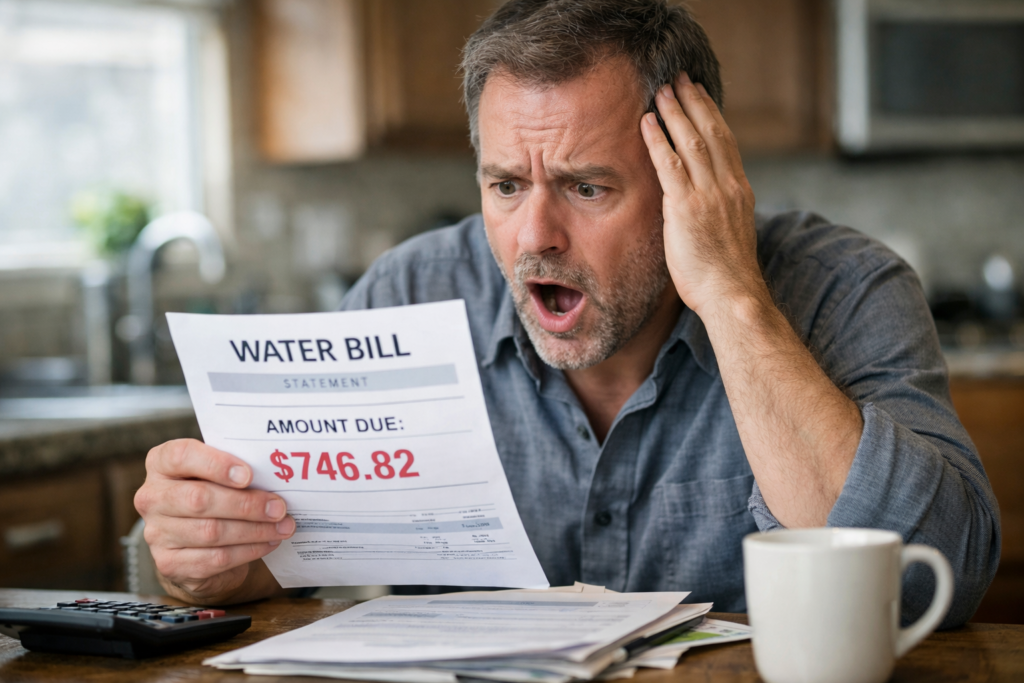
Fixture faults are usually easier to confirm than hidden pipe leaks and often cheaper to fix. They also separate constant waste from normal use. If nothing obvious appears, check irrigation lines, water softeners, boilers with filling loops, and mains-connected appliances.
For toilets that run on and off, the US EPA WaterSense guidance offers a clear checklist for spotting silent refill problems. Note which fixture leaks, when it happens, and whether the sound is constant or intermittent. That record speeds repairs and helps explain changes on the next bill.
Test Appliances and Water Heaters for Faults That Raise Usage
If the meter keeps moving, do not assume the leak is in visible pipework. Appliances and hot water equipment can waste water internally, and the loss may stay hidden until bills rise.
Check the washing machine, dishwasher and any water softener first. A worn inlet valve can let water seep into the drum or tank between cycles, while a faulty float, pressure switch or control valve can trigger repeated filling. Check hose connections and listen for a faint refill sound when the unit should be idle.
Water heaters need a separate check. A leaking temperature and pressure relief valve can discharge water slowly for weeks, and a faulty expansion vessel can raise pressure and force that valve open more often. On vented and unvented systems, overflow or discharge pipework should stay dry. If high usage appears with heating issues, review why is my boiler losing pressure, since pressure loss and discharge can point to a wider system fault.
These faults can waste water without obvious indoor signs and raise both water and energy costs.
Review Outdoor Plumbing, Irrigation Lines and Hose Bibs
Outdoor leaks often run for weeks unnoticed, especially on irrigation lines and hose bibs hidden by soil, mulch or planting.
Start at the meter side of the property and follow each exposed pipe, tap and valve. Check hose bibs for drips, seepage around the handle and damp brickwork below. Inspect irrigation zones one at a time. Look for soft lawn patches, unusually green strips, pooling near sprinkler heads and misting spray, which often points to a cracked head or split line.
If you have an irrigation controller, turn off scheduled watering for 24 hours and compare the meter reading before and after. On larger systems, isolate zones manually to narrow the problem area. Guidance from EPA WaterSense can help spot waste from misaligned or damaged sprinklers.
Avoid checking straight after rain, since wet ground can hide a leak. Do not ignore small drips at outdoor taps or assume a greener patch means healthy growth. Replace worn hose washers, tighten loose connections carefully, and call a plumber or irrigation specialist if the meter still moves when outdoor lines are shut off.
Know When a High Water Bill Points to a Serious Plumbing Issue
Costs rise fast when a high water bill comes from a burst pipe, failed pressure control, or a hidden mains leak rather than normal use. The issue quickly shifts from wasted water to property damage, mould, and damage to floors, plaster, or electrics.
Check for signs of a deeper fault. Sudden loss of water pressure, discoloured water, banging pipes, damp patches, warm spots on floors, or ceiling water marks often point to trouble within the system. If the stop tap is off and the meter still moves, the leak may be on the supply line or in buried pipework.
Serious plumbing faults rarely stay isolated. A leaking mains pipe can wash away soil around foundations, while a failed pressure-reducing valve can strain taps, appliances, and flexible connectors across the property. If the bill jumps sharply or active leakage appears indoors, arrange Emergency Plumbing Services at once.
Fast action limits repair work and helps preserve evidence for insurers or your water supplier if a leak allowance scheme applies. Take meter readings, note when the increase started, and photograph visible damage before repairs begin.
Frequently Asked Questions
What plumbing problems most often cause a sudden increase in a water bill?
Hidden leaks cause most sudden water bill increases. Check toilets that keep running, dripping taps, leaking pipes under sinks, faulty pressure relief valves, and outdoor leaks from irrigation lines or hose bibs. A failing water heater, softened water system leak, or underground supply line leak can also raise usage fast.
Can a hidden leak raise my water bill even if there are no visible signs of water damage?
Yes. A hidden leak can waste water for weeks without staining walls or ceilings, especially if it sits under floors, behind plaster, or in buried pipework. Your bill can rise long before visible damage appears. A constantly moving meter or unexplained overnight usage often points to a concealed leak.
How can I tell if a running toilet is causing high water usage?
Check the toilet first by listening for constant refilling and looking for water movement in the bowl when it has not been flushed. A running toilet can waste a large amount of water all day. Add a few drops of food colouring to the cistern; if colour appears in the bowl without flushing, the flapper or valve is leaking.
Could a faulty water heater or pressure regulator make my water bill higher?
If the heater leaks or the pressure regulator fails, water use can rise fast. A faulty water heater may drip from the tank or relief valve, while high pressure can increase flow at every tap and worsen hidden leaks. Check for pooling water, valve discharge, or unusually forceful water flow.
When should I call a plumber to investigate an unusually high water bill?
A sudden jump of 20% or more from your usual bill often points to a leak or faulty plumbing. Call a plumber if the increase lasts for more than one billing cycle, or if you notice damp patches, low pressure, running toilets, or unexplained meter movement. Early checks can stop wasted water and bigger repair costs.