A radiator that is cold at the bottom but hot at the top usually has sludge, rust, or debris blocking the lower channels and restricting hot water flow. Air in the system more often leaves radiators cold at the top, so the temperature pattern helps identify the fault. This article explains the common causes, how to confirm them, and which fixes may restore even heat. It also covers when bleeding, flushing, or calling a heating engineer is the right next step.
Key takeaways
- If the top stays hot and the bottom cold, sludge is the usual cause.
- Rust, limescale and magnetite settle in lower channels, reducing flow and heat transfer.
- Do not assume trapped air; air usually leaves the top cool, not hot.
- Flush the radiator outside with clean water to confirm internal sludge and blockage severity.
- Use a hose, reverse the flow, and tap the lower edge gently.
- Choose a full system flush if several radiators warm slowly or circulation turns noisy.
Why a radiator stays hot at the top but cold at the bottom
Check the radiator’s lower panel after the heating has run for 30 minutes. If the top is hot but the bottom stays cool, sludge is the usual cause, not trapped air.
Central heating water carries rust, limescale and magnetite, a black iron oxide from corroding steel parts. This debris settles at the bottom, where flow slows and heat transfer drops. Hot water still reaches the upper channels, leaving the lower section cold.
This points to poor circulation inside the radiator. Bleeding only helps if air is also present. The usual fix is flushing the radiator or system and adding inhibitor to slow future corrosion, as advised by Sentinel and Fernox.
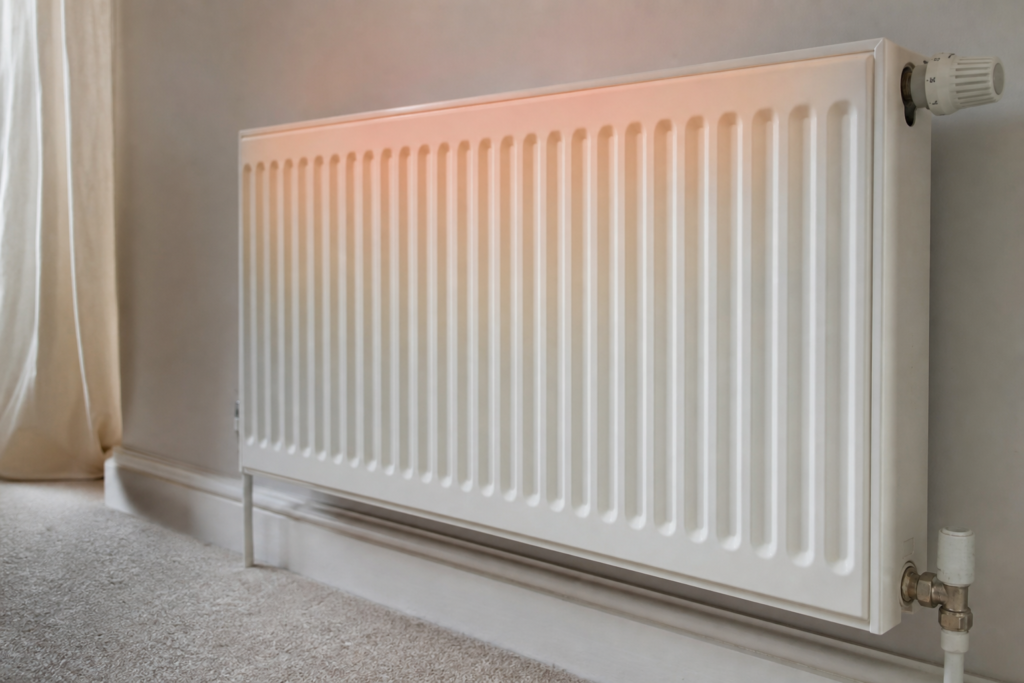
Sludge build-up and blocked flow inside the radiator
A heavily sludged radiator can lose much of its lower heat output even if the rest of the heating still works. Isolate it, remove it, and flush it outside with clean water. If black water, flakes, or grit keep coming out, the blockage is inside the panel, not the valve.
This targets the fault, costs less than a whole-system clean, and shows how severe the contamination is. A clear flush can also show whether poor circulation comes from internal build-up or a sticking thermostatic valve.
Use a full powerflush if several radiators show the same pattern, the pump strains, or dirty water returns soon after cleaning. After flushing, add corrosion inhibitor and consider a magnetic filter to catch new magnetite.
How to check whether the problem is air, sludge or a valve fault
Do not bleed the radiator first and assume trapped air is the fault. Air collects at the highest point, so it usually leaves the top cool while the lower section still warms. If the top is hot and the bottom stays cold, check whether both valves get hot and whether the lockshield side warms more slowly than the flow side.
Turn the heating off and let the radiator cool enough to handle. Open the bleed valve briefly. A short hiss followed by water suggests a small air pocket, but that alone rarely explains a cold lower panel. If both valves are open and one pipe stays much cooler, restricted circulation is more likely. Causes include a stuck thermostatic pin, a seized lockshield, or broader Boiler Faults affecting system flow.
If the radiator heats only when the valve is adjusted, inspect the valve body and head before removing the radiator again. On combination boilers, poor hot water and heating control can also point to a Diverter Valve problem rather than the radiator itself. This check helps narrow the cause before larger repairs.
Steps to fix a radiator that is cold at the bottom
Flush the radiator first, because a cold bottom usually means sediment is blocking the lower channels. Turn the heating off, let the radiator cool, close both valves, drain it, then lift it off its brackets and take it outside.
Run a hose through each valve opening until the water clears. Tap the lower edge gently with a rubber mallet to loosen sludge, reverse the flow, then flush again. Refit the radiator, reopen both valves to their previous positions, bleed trapped air, and top up the boiler pressure if needed.
Avoid forcing old valve nuts, reopening the lockshield fully without noting its setting, or leaving dirty system water untreated. If several radiators have the same fault, book a full system clean and add fresh inhibitor that meets BSRIA guidance after refilling.
When to flush the system or call a heating engineer
Heat output improves across every radiator when sludge is removed from the wider system, not just one panel. A single radiator flush is often enough after a local blockage, but repeated cold spots, noisy circulation, or several slow-warming radiators point to contamination moving through the pipework.
At that stage, a full system flush makes more sense than removing more radiators one by one. A heating engineer can test water quality, check pump performance, inspect the magnetic filter if one is fitted, and decide whether a chemical flush or powerflush is justified. If the boiler shows fault codes, system pressure keeps changing, or valves are seized, book a Hire local Plumber rather than forcing parts loose.
After cleaning, add inhibitor to slow fresh corrosion and help prevent magnetite returning. If the problem keeps coming back, deeper faults such as poor circulation, incorrect balancing, or internal corrosion may need a broader heating inspection. For wider maintenance guidance, see Property Help.
Frequently Asked Questions
Why is a radiator cold at the bottom but hot at the top?
Sludge build-up is the usual cause. Rust, dirt and debris settle in the bottom of the radiator and block hot water flow there, while the top still warms up. Bleeding helps trapped air at the top, but a cold bottom often points to a flush.
Does a radiator that is cold at the bottom need bleeding?
Usually, no. A radiator that is hot at the top but cold at the bottom points to sludge or debris restricting water flow, not trapped air. Bleeding helps when the top stays cold, while a cold bottom often means the system needs cleaning or power flushing.
Can sludge cause a radiator to stay cold at the bottom?
Check for sludge first if the radiator stays cold at the bottom. Sludge settles in the lower part of the radiator and blocks hot water from circulating evenly. Bleeding will not fix this, so the system may need a flush or the radiator may need removing and cleaning.
How can you tell whether the problem is sludge or trapped air?
If the radiator stays hot at the top and cold at the bottom, sludge is the more likely cause. Sludge settles in the lower channels and blocks heat flow.
Trapped air usually leaves the top cold or patchy, often with gurgling. Bleeding the radiator helps with air, but sludge often needs flushing.
When should you call a heating engineer for a radiator that is cold at the bottom?
Two signs point to professional help: the radiator stays cold at the bottom after bleeding, or several radiators show the same problem. That often means sludge has built up in the system. Call a heating engineer if balancing does not help, heating is uneven across the house, or pressure keeps dropping.