Low water pressure in one shower only is usually caused by a local restriction or fault within that shower’s supply, valve, showerhead, or pipework, rather than a whole-house plumbing problem. The cause often differs between mixer showers, electric showers, and gravity-fed systems. This article explains the most common reasons, including limescale build-up, blocked filters, failing cartridges, partially closed valves, and hidden leaks, and outlines how to identify the fault before arranging repairs.
Key takeaways
- Compare the shower with the nearest cold tap to confirm the fault is local.
- Weak hot flow only often points to a blocked cartridge or hot supply restriction.
- Check the shower head and hose first for limescale, debris, kinks or outlet blockages.
- A worn shower valve may not open fully, reducing flow even with sound plumbing.
- Partly closed isolation valves, pipe scale, solder debris or crushed pipework can restrict one shower.
- Test the nearest hot tap on full hot to check the heater and upstream supply.
- Clean accessible parts first, but call a plumber for hidden leaks, failed cartridges or pipe faults.
How to Confirm the Problem Is Limited to One Shower
Turn on the nearest cold tap, then run the shower and compare the flow. If the tap stays strong but the shower stays weak, the fault is likely in the shower valve, head or hose, not the main supply.
Test hot and cold settings. Weak flow only on hot often points to a blocked thermostatic cartridge, limescale in the valve or a restriction in the hot water system. If both are weak, the head, hose or isolation valve is more likely.
Check if the problem happens only at certain times. Peak demand can affect one shower first if it sits on a longer pipe run or shares pipework with another fitting.
Remove the shower head and run the shower briefly into a bucket. Strong flow without the head confirms a clogged head or flow regulator. Weak flow points to the valve, hose, hidden isolation valves or a pipe blockage. If the shower is fed by a combi boiler or unvented cylinder, Water Regs UK and the HSE support using a qualified plumber for work on sealed hot water systems.
Shower Head Blockages and Valve Faults That Reduce Flow
Flow often drops when limescale narrows shower head nozzles or a worn valve does not open fully. Check the shower head and hose first, since they are quickest to inspect, clean and replace. Unscrew the head, inspect the spray plate for mineral build-up, and soak it in descaler if the manufacturer allows it.
Blockages at the outlet restrict flow straight away, even if the rest of the plumbing is sound. A kinked hose can have the same effect. If cleaning restores pressure, the fault was local to the fitting, not deeper in the pipework. Mineral deposits can affect other fixtures too, although the method to how to unclog a sink differs from clearing a shower head.
If the head and hose are clear, the shower valve is the next likely cause. Thermostatic cartridges can clog with debris or scale, and pressure-balancing valves can stick as seals wear. Replacement parts often fix the issue, but older valves may need a full unit change if spares are unavailable.
Pipe Restrictions, Leaks, and Pressure-Balancing Issues Behind One Shower
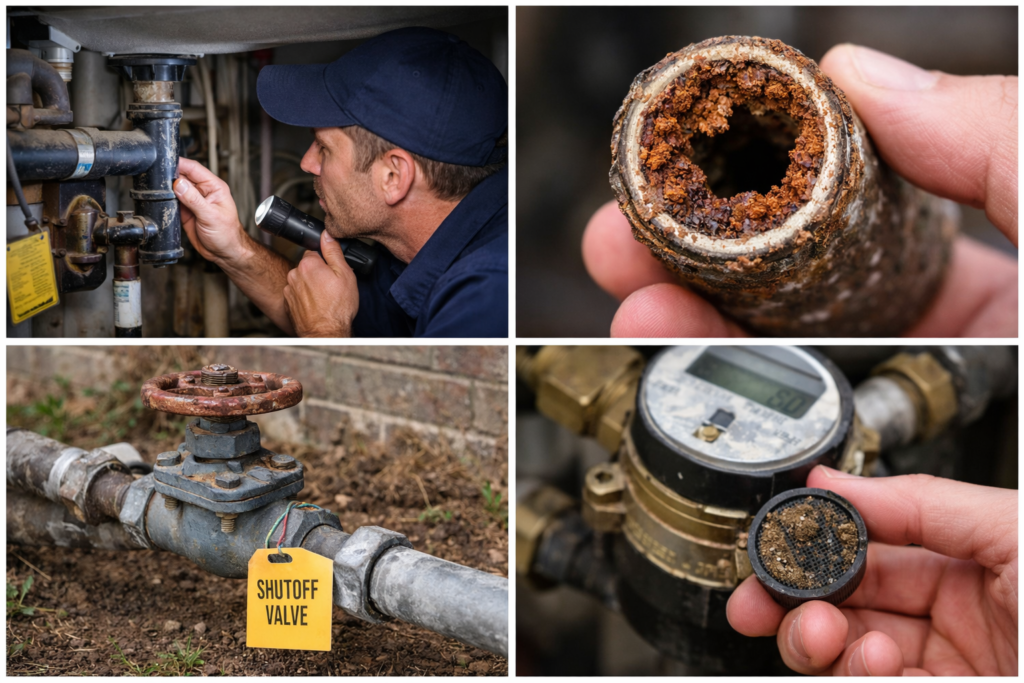
Do not assume the shower fitting is at fault after checking the head, hose and valve. A restriction may sit deeper in the branch pipe feeding that shower. Scale, solder debris, a partly closed isolation valve, or a crushed pipe section reduces the bore, so less water reaches the mixer even when pressure elsewhere stays normal.
Leaks can cause the same symptom. A small leak under a floor or behind a wall lets water escape before it reaches the outlet, cutting flow and sometimes causing staining, damp patches or a pressure drop when hot and cold run together. On older systems, galvanised steel pipe can corrode internally and narrow over time.
Pressure-balancing parts inside the shower can also weaken flow. In mixer and thermostatic showers, the balancing spool or cartridge reacts to differences between hot and cold supplies. If one side is restricted, the mechanism may throttle the stronger side to prevent scalding. Tracing the pipe run and checking concealed valves often reveals more than replacing visible parts again.
How Water Heater Settings and Supply Conditions Affect a Single Shower
The hot water setting often reveals the cause fastest. If flow drops only on hot, check the water heater and hot supply before opening the shower again.
Turn the shower to full hot, then test the nearest hot tap. If that tap also runs weak, the issue sits upstream. Check that the water heater outlet valve is fully open, that any thermostatic mixing valve near the cylinder is not set too low, and that the heater can supply enough flow. Combination boilers can struggle when another outlet uses hot water, while gravity-fed systems lose flow when the cold-water storage level is low.
If weak flow appears only at that shower on hot, check that branch. A partly closed hot-line service valve, a clogged inlet strainer on a thermostatic mixer, or heavy limescale can cut hot flow sharply. Guidance from Water UK member companies and CIPHE supports checking valves, strainers and system type before replacing parts.
Do not turn up the heater temperature first. That raises scald risk and may not improve flow. Test under normal household demand, since supply limits often appear only when other outlets are in use.
When to Clean, Repair, or Call a Plumber for One Weak Shower
- Shower head nozzles show limescale build-up.
- The hose is kinked or obviously restricted.
- Flow becomes strong when the shower head is removed.
- The issue appears local to the fitting rather than the wider supply.
- Flow stays weak with the shower head removed.
- You suspect a hidden leak, crushed pipe or concealed isolation valve problem.
- The fault may involve a thermostatic cartridge or balancing part deeper in the valve.
- The shower is fed by a combi boiler or unvented cylinder and work may affect a sealed hot water system.
Flow improves fastest when the right fix matches the fault. Clean the shower head or hose when scale or debris sits at the outlet, repair the valve when temperature control or handle movement feels stiff, and call a plumber when the problem points to hidden pipework, a failed cartridge, or a leak behind the wall.
Start with the parts you can reach without opening tiles or pipe runs. A removable head, hose washer, or exposed valve trim can often be cleaned or replaced with basic tools. If pressure stays low after that, the fault is likely inside the mixer body, the branch supply, or an isolation valve that is not fully open.
Call a plumber sooner if the shower pressure dropped suddenly, the wall shows damp, or the valve body leaks during use. Those signs suggest a deeper restriction or water escaping before it reaches the outlet. If another fixture also runs poorly, check x the 5 Most Common Causes for a broader plumbing fault pattern, then arrange a proper inspection.
Frequently Asked Questions
What are the most common causes of low water pressure in one shower only?
The most common causes are a clogged shower head, a partly closed shower valve, or a fault in the cartridge or mixer. Limescale and debris often restrict flow at the outlet. If only one shower is affected, the problem usually sits in that shower’s fittings rather than the home’s main water supply.
Can a clogged shower head reduce water pressure in just one shower?
Yes. If low pressure affects only one shower, the shower head is a common cause. Limescale, sediment, and debris can block the spray holes and restrict flow. Remove and clean the head first. If pressure stays low, check the valve, cartridge, or supply line for a deeper blockage.
Could a faulty shower valve cause low water pressure in one bathroom?
Inspect the shower valve first. A worn cartridge, mineral build-up, or a partially blocked pressure-balancing valve can restrict water flow to that shower alone. If the pressure dropped suddenly or the handle feels stiff, the valve is a strong suspect and may need cleaning or replacement.
How can you tell whether low pressure in one shower is caused by a plumbing blockage?
If the pressure drop affects only one shower, a blockage is likely. Check whether the sink, toilet and other showers still run normally. Mineral build-up in the showerhead, a clogged cartridge, or debris in the valve often causes weak flow from that single outlet.
When should you call a plumber for low water pressure in one shower only?
If pressure drops suddenly or stays weak after 24 hours, call a plumber. A single-shower problem often points to a blocked showerhead, faulty cartridge, hidden leak, or local pipe issue. Get professional help sooner if you hear pipe noise, see damp patches, or notice fluctuating hot and cold flow.