You can unclog a kitchen sink without damaging your pipes by using safe methods such as boiling water, washing-up liquid, a plunger, and a bicarbonate of soda and vinegar flush before trying stronger measures. The right method depends on whether grease, food waste, or a partial blockage is slowing the drain. This guide explains which steps to take first, which tools to use carefully, and which common mistakes can crack seals, loosen joints, or harm older pipework.
Key takeaways
- Stop using the sink, remove standing water, and check how each basin drains.
- Slow drainage often means grease, soap residue, or food waste in the trap.
- Start with a sink plunger, then remove and clean the trap by hand.
- Use very hot water in stages, not boiling water, especially with PVC pipes.
- Add a little washing-up liquid to help loosen grease and soap inside pipes.
- Avoid caustic or acidic drain cleaners that can weaken seals and corrode pipes.
- Call a plumber if backups spread, smells persist, or careful snaking fails.
Identify the Cause of the Kitchen Sink Blockage Before You Start
| What you notice | What it may indicate |
|---|---|
| Slow drainage | Grease, soap residue, or food waste in the trap |
| Immediate backup | Denser blockage deeper in the waste pipe |
| One basin affected | Problem near that basin’s trap or branch pipe |
| Both basins back up | Obstruction in the shared waste line |
| Gurgling from the plughole or nearby appliances | Trapped air from a partial blockage |
| Water rising in a connected dishwasher outlet | Waste hose or spigot may be involved |
| Bad smell | Decomposing food or grease build-up |
Stop using the sink and remove standing water first. How it drains, or fails to drain, gives the clearest clue to the blockage. Slow drainage often points to grease, soap residue or food waste in the trap. Immediate backup can mean a denser blockage deeper in the waste pipe.
Check whether one basin or both are affected if you have a double sink. One slow side often means a problem near that basin’s trap or branch pipe. If both back up, the obstruction is more likely in the shared waste line.
Run water briefly and listen for gurgling from the plughole or nearby appliances. Gurgling can signal trapped air from a partial blockage. Water rising in a connected dishwasher outlet may mean the waste hose or spigot is involved. A bad smell often points to decomposing food or grease build-up.
Look under the sink before choosing a method. Plastic traps and compression fittings can crack if handled roughly or exposed to harsh chemical cleaners. The NHS advises care with household chemicals, as caustic drain products can damage seals, mark finishes and create a splash risk when you open the pipework.
Once you know whether the blockage is in the trap, branch pipe or main waste line, start with the safest fix. Manual removal, hot water and mild cleaning should come before tools that apply more force.
Use Safe Manual Methods to Clear a Kitchen Sink Without Harming Pipes
Manual clearing often restores normal flow within minutes and carries less risk than harsh chemical cleaners. Start with a plunger, then clean the trap by hand if the blockage remains. This clears most kitchen sink clogs without exposing metal or plastic pipes to corrosive products.
A sink plunger can shift soft blockages such as grease, food residue and soap build-up. Seal the overflow, add enough water to cover the cup, and use short, firm strokes. If the sink still drains slowly, place a container under the trap, undo the slip nuts, and remove trapped debris directly.
Use a drain snake only when the blockage sits beyond the trap and plunging has failed. Feed it slowly to avoid damaging joints. Leave chemical drain cleaners as a last resort, especially on older metal pipes, because caustic ingredients can weaken seals and speed corrosion. Guidance from the NHS and the Health and Safety Executive supports limiting exposure to strong household chemicals where safer methods work.
Apply Hot Water and Mild Cleaning Solutions the Right Way
Boiling water is not always safe for PVC joints, older sealants or sinks with standing water that cools the flush before it reaches the clog. Use hot tap water or water heated until very hot, not rolling, and pour it in stages so heat can soften grease without stressing the pipework.
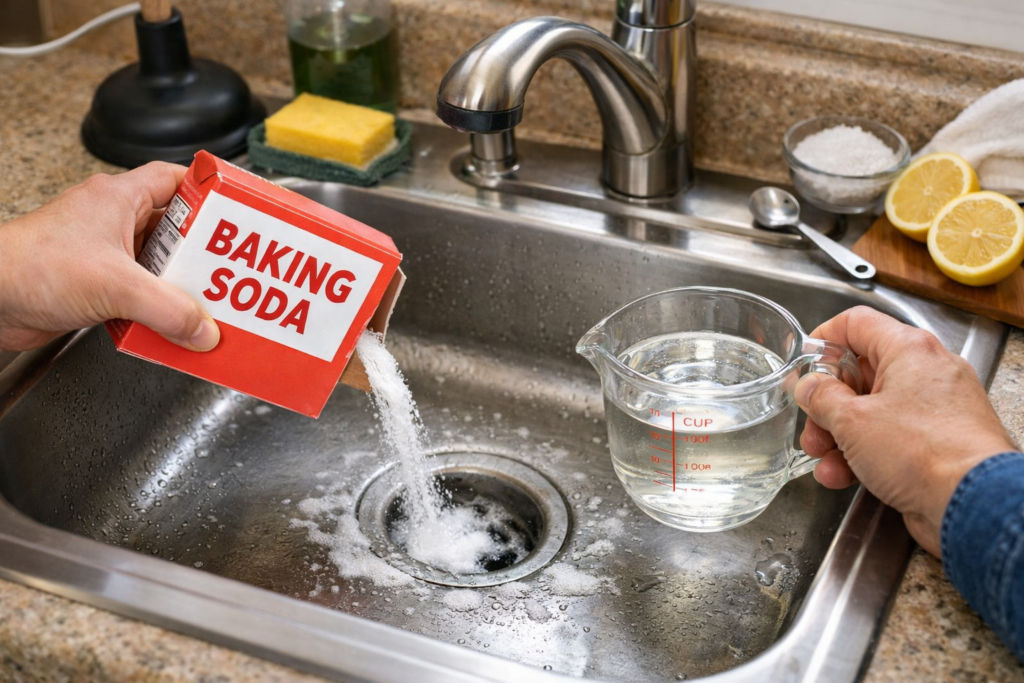
Hot water loosens fatty deposits and soap residue on the inner wall of the waste pipe. Add a small amount of washing-up liquid, or use a mild bicarbonate of soda solution followed by hot water. Keep bicarbonate modest and never combine it with strong chemical drain cleaners, which can react unpredictably and leave corrosive residue in the trap.
Pour slowly, not in one fast surge. A controlled flow keeps heat against the blockage longer and helps move softened material through the bend into the main waste line. Wait several minutes, then test drainage with fresh hot water. If the sink still backs up, the blockage is likely too compact or too far down the pipe for heat and mild cleaners alone.
Avoid Drain-Cleaning Mistakes That Can Damage Kitchen Sink Pipes
- Manual removal and plunging carry less risk than harsh chemical cleaners
- Hot tap water or very hot water in stages can soften grease without stressing pipework as much as boiling water
- A small amount of washing-up liquid or a mild bicarbonate of soda solution can help loosen residue
- Using a drain snake gently after other methods can help when the blockage sits beyond the trap
- Caustic liquids and acidic cleaners can weaken seals and speed corrosion
- Harsh chemicals can create a splash risk when you open the trap
- Boiling water is not always safe for PVC joints, older sealants, or sinks with standing water
- Combining bicarbonate with strong chemical drain cleaners can react unpredictably and leave corrosive residue
Chemical drain cleaners often cause more damage than the blockage, especially in older metal pipes and plastic joints.
Avoid caustic liquids, acidic cleaners and any product that leaves corrosive chemicals in the drain. They can weaken seals, speed corrosion and create a splash risk when you remove the trap. If the blockage remains after safe manual clearing and mild cleaning, use a drain snake gently or contact a qualified plumber.
Read every product label before pouring anything into the sink. HSE guidance warns that mixing cleaners can release harmful fumes and cause burns. Never combine bleach with vinegar, ammonia-based cleaners or leftover drain products.
Do not force tools past tight bends, hammer chrome fittings or plunge an empty sink too hard. These mistakes can crack trap seals, loosen compression nuts and damage basket strainers. If water backs up into other fixtures, or the sink blocks again soon after clearing, the obstruction is likely deeper in the waste line and needs professional equipment.
Know When a Stubborn Kitchen Sink Clog Needs a Professional Plumber
Pipe damage, leaks and sewage backup become more likely when a stubborn clog does not respond to safe clearing methods. Call a professional plumber if water backs up into other fixtures, foul smells persist after cleaning, or the sink stays blocked after plunging, trap cleaning and careful snaking. These signs can point to a deeper blockage, a venting fault, or a partial collapse in older pipework.
A licensed plumber can inspect the line without guesswork. Drain cameras can find grease build-up, compacted debris, root intrusion or damaged joints before clearing the pipe. For severe blockages, mechanical augers and professional jetting equipment remove material more fully than household tools, with less risk of cracking fittings or pushing the clog further down.
Act quickly if the blockage returns within days, if more than one drain is slow, or if water appears under the sink or inside a cabinet. Repeated clogs often signal a larger drainage problem, not residue near the plughole. In the UK, check approved schemes such as WaterSafe or guidance from the Chartered Institute of Plumbing and Heating Engineering.
Frequently Asked Questions
What is the safest way to unclog a kitchen sink without harming the pipes?
Use a plunger first, then flush with hot water. If the blockage remains, remove and clean the U-bend by hand with a bucket underneath. Avoid harsh chemical drain cleaners, as they can corrode some pipes and seals.
Which household methods can clear a blocked kitchen sink without using harsh chemicals?
Use gentle, mechanical methods before any cleaner. Start with boiling water if grease is the cause, then try washing-up liquid, a plunger, or a baking soda and vinegar flush. If the blockage remains, remove and clean the U-bend by hand to avoid stressing the pipes.
How can you tell whether a kitchen sink blockage is caused by grease, food waste or a deeper pipe issue?
Check how quickly the water drains and whether other fixtures back up. Slow drainage with oily residue or bad smells near the plughole often points to grease or trapped food waste. If water backs up elsewhere, gurgles loudly, or returns after clearing, the blockage is likely deeper in the pipework.
When should you avoid using a plunger or drain snake on a kitchen sink?
Avoid a plunger or drain snake if the sink holds standing water after a chemical drain cleaner was used. Splashback can burn skin and eyes, and a snake can spread the chemical deeper into the pipe.
Also stop if you suspect a fragile, corroded, or loose pipe, or if the blockage may sit in the main line.
What signs show that a clogged kitchen sink needs a professional plumber?
After 30 to 60 minutes of plunging or safe drain cleaning, water should drain more freely. If it still backs up, or returns quickly, the blockage may sit deeper in the line.
- Repeated clogs in the same sink
- Water backing up into another drain
- Gurgling sounds or foul odours
- Leaks under the sink or slow drainage in multiple fixtures